
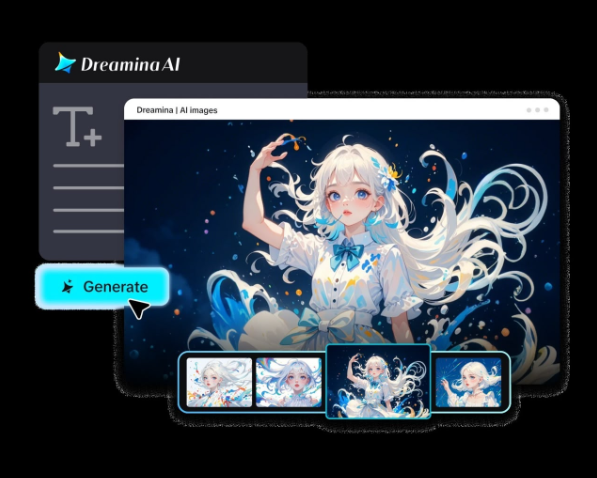
Poster and presentation design must be able to convey information, have a well-thought-out layout, readable typography, appropriate imagery, and good visual hierarchy. Dreamina AI is designed to transform creative concepts into visuals like posters, infographics, and presentation material. Seedream 5.0 Pro, GPT Image 2, and Nano Banana provide various methods for generating images. Dreamina helps you explore visually by interpreting prompts, styles, context, and composition. But the text, figures, and final layouts must be carefully verified. The structured workflow takes you from design brief to artwork generation, refinements, and final assembly.
Plan the Visual Hierarchy Before Generating Artwork
Good designs determine a reading order before they get into detailed styling. In general, posters require a strong heading, central image, supporting data, and sufficient white space to delineate the necessary information. There also needs to be a logical relationship between the title, illustration, data, and explanatory text of the presentation slides. Select images to support the message, rather than fill up the page for no reason. Prior to opening Dreamina AI, specify the demographics, structure, communication goal, and key facts. These decisions create a realistic design brief and will reduce the likelihood of cluttered compositions. Important information is more noticeable, easier to understand, and easier to remember with a strong hierarchy.
Use Dreamina AI to Explore Design Concepts and Visual Directions
Dreamina AI allows you to explore visual directions, using prompts to describe the subjects, styles, palettes, and compositions. It’s an AI image generator free online and is a helpful way to get started creating artwork, subject to access and availability. Reference images can be used to help the visual direction towards specific layouts, brand aesthetics, and any pre-existing creative ideas. Different models such as Seedream, GPT Image, and Nano Banana may have varying methods of generating images. Dreamina’s AI creative agent can generate up to 40 visual directions based on the information provided about the features and their availability. Comparing ideas helps to distinguish more powerful compositions, atmospheres, and focal points. Note that the generated artwork is not a full, modifiable presentation – it needs to be laid out separately.
Six Design Principles for Clearer Posters and Presentation Visuals
Follow these six principles when creating poster images and visuals for presentations using Dreamina AI.
- Information hierarchy: Make headlines and main visuals prominent; provide supporting information in subordinate and logical order.
- Composition planning: Consider where to place the main subject and allow sufficient space for key words and details.
- Typography clarity: Select legible type treatment that matches style; double-check each word that is generated.
- Coherence of backgrounds, headings, and accents within related designs.
- Visual relevance: Choose images that convey the topic immediately, and avoid images that have decorative elements that add complexity.
- Format adaptability: Resize to fit the poster/slide, verify cropping, readability, spacing, and alignment.
Steps to Design Posters & Presentations Faster With a Smart AI Image Generator
Step 1: Open Dreamina and Outline Your Design Idea
- Sign up or log in to Dreamina to start building your poster or slide visuals.
- Select the “Create” tab from the left menu and open the “AI Image” option.
- Write a detailed text prompt describing the layout and look you need for your design.
- Include image elements, theme, and concept so the visual matches your message.
Step 2: Configure Your Model and Layout Settings
- Look at the bottom of the dialogue box and pick an image model.
- Choose Seedream, GPT Image, or Nano Banana based on your design preference.
- Add a reference image to give your design a more precise and natural appearance.
- Match your poster or slide format by setting the “Aspect ratio” and “Resolution” tabs.
- Use the “Images to generate” tab to create multiple design options together.
- Enter custom print or screen sizes in the “Dimensions” tab.
- Insert titles or key messages with the “Draw text on image” tab.
- Click the “Generate” tab to launch the creation process.
Step 3: Refine Your Design and Export It
- Dreamina delivers the selected number of drafts, so review which layout works best.
- Use “Edit prompt” or “Regenerate” to improve results you do not like
- Enhance the clarity of your chosen draft with the “Creative upscale” option.
- Choose “Retouch” to correct, clean up, or enhance details of the selected image.
- Use “Remove” to clear unwanted elements, or select “Expand” to enlarge your design area.
- If you want to generate a video of the generated image, you can use the “Generate video” ta
- Dreamina gives you complete freedom to edit your image the way you like.
- Click the “Download” tab at the top right to save the video file on your local device
Create Poster Artwork That Communicates a Message
Dreamina AI allows you to explore various poster layouts visually. Event posters may include background images in the atmosphere, and educational posters can include explanatory visuals to aid learning objectives. Promotional graphics can feature products with room for campaign messages. Thematic illustrations are a great way to convey complicated ideas in conference and editorial posters. Compositions that are appropriate for the size of the digital announcement are also advantageous. Always check the factual information, dates, venue, names, prices, etc. before publishing.
Develop Presentation Visuals Without Losing Information Accuracy
Dreamina AI can create drawings that can be used to create a visual theme throughout a presentation. Incorporate artwork to introduce a topic, explain a process, or reinforce a key concept. If available, Seedream 5.0 Pro is targeted for information-rich visuals, contextual understanding, and layout-oriented design. Infographic ideas created can make complicated topics easy to understand, but check numerical values, labels, and factual statements. If possible, include only one main idea per slide. Bring in images from an import and position them within a presentation editor for accurate placement, text editing, and full slide construction.
Refine Layouts, Text, and Visual Details Before Export
Review headlines, labels, dates, numerical values, and important wording prior to export. Test text for readability at the intended display size and use “Remove” or “Retouch” to remove unwanted details (where applicable). When more canvas area is useful for cropping or for supporting elements, select “Expand”. Re-imagine artwork that is compositionally or hierarchically incorrect to fulfill the brief. Lastly, check alignment, margins, contrast, resolution, and consistency of related assets. Image generation is not a substitute for proofreading or data verification.
Prepare Artwork for Print, Slides, and Digital Distribution
The size of the image is not necessarily the size of a full document. Specific resolution, color handling, bleed, and file formats may be required for printing posters. Visuals for presentations should be able to fit on the slide and be legible when projected. Keep in mind that the downloaded image may not be an editable presentation or printable document. Verify technical requirements prior to delivery to the destination. Check for applicable rights and permissions with regard to uploaded references, fonts, logos, prompts, and generated materials.
Conclusion
Dreamina AI streamlines the creation of poster art, presentation graphics, and design ideas that convey information. But good results would still rely on visual hierarchy, proper dimensions, easy-to-read text, and validated information. Brainstorm ideas and speed up artwork creation with AI, while maintaining control over final layouts. Always begin with the message, create the graphics, tweak the composition, and proofread thoroughly before exporting